

 Türkçe
 Deutsch
 Français
Made to teach
reading.
Sesh is an iPhone and iPad app that teaches Middle Egyptian, the classical stage of the ancient Egyptian language, written in hieroglyphs. It takes you from one royal name to the Story of Sinuhe in the original, in 231 lessons, on real objects from the world’s museums, checked against the reference works of Egyptology.
A scribe’s kit (palette, water pot, reed holder), then a seated man. Allen transliterates the word zẖꜣ.
Four
principles.
A translator converts. Sesh teaches you to read.
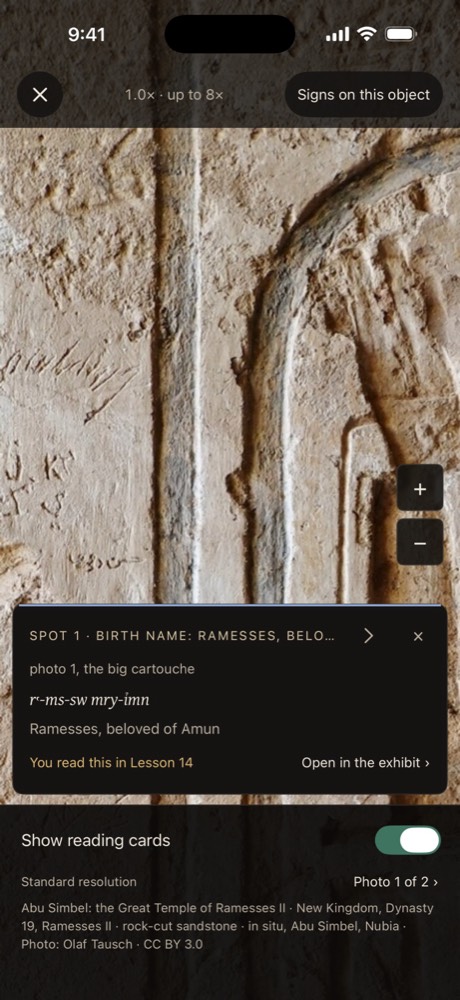
Every line is taken apart: the signs, their sounds, a word-by-word gloss, then the translation. The goal is that you can do this yourself, on a text you have never seen. Each of the four certificates is earned exactly that way.
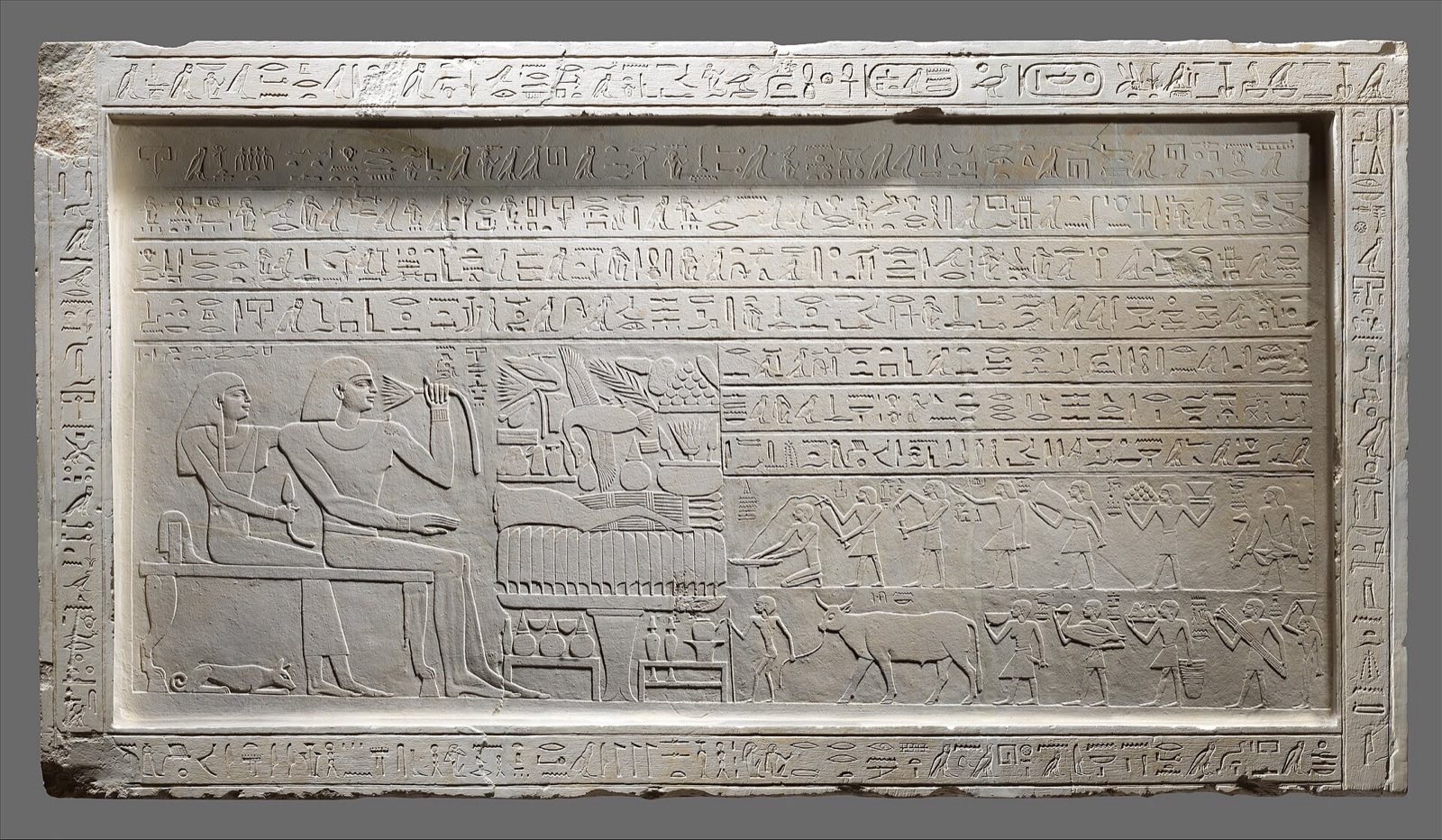
Lesson 1 opens on a limestone relief with King Khufu’s cattle at The Metropolitan Museum of Art (22.1.3a,b), and the course keeps returning to real stelae, papyri, statues and temple walls. 132 of them wait in the Reading Room, with their museums and inventory numbers.
Every sign, word, rule and reading in Sesh names where it comes from, down to the paragraph and page. Where scholars disagree, the card says so instead of picking a side quietly.
What it shows: uncertain. Gardiner: perhaps a placenta. Other views: Allen, unknown, possibly a loaf; Manley, a ball of twine.
Every photograph shows the real object, from museum open-access collections and Wikimedia Commons, with its photographer and licence next to it. Nothing is generated, and no artefact is redrawn to look ancient.

A teaching order,
checked four ways.
The curriculum follows the progression of Collier & Manley’s How to Read Egyptian Hieroglyphs, which has students reading real inscriptions from the start. Every fact in it is then checked against the standard references.
Gardiner, Faulkner and Allen come first; for royal names, Leprohon’s The Great Name. Collier and Manley set the teaching order.
Only facts are taken from these books: sound values, sign codes, word meanings, dates, formulas, the order of topics. Their sentences, examples, translations and exercises are not copied. The lessons are written for Sesh, and the ancient texts are read and translated afresh; the inscriptions themselves are thousands of years old and belong to no one.
The full list of works, with editions, is on the References page.
Sign by sign,
source by source.
Its code, sound and function against Gardiner’s sign list. Where what a sign shows is uncertain, the card says “uncertain”.
Its meaning and reading against Faulkner, its form against Allen. The citation travels with the word.
Against Leprohon’s The Great Name, so that a cartouche is read for the right king.
An inscription cannot be checked in a grammar: it is compared with the museum’s record and the photograph. Lines we cannot verify stay out of the app.
Report an error.
A mistake in a lesson or a reading can be reported from inside the app. If you leave the option on, the report includes the screen you were on, the app version, the iOS version and the app language, so we can find the line quickly. Scholars sometimes disagree, and we correct mistakes when they are reported.
Or write to support@hieroglyphs.app.
Made by an independent developer.
Sesh is not affiliated with any of the museums whose objects it shows. Its photographs come from open-access collections and are credited where they appear.

