
 Türkçe
 Deutsch
 Français
Hieroglyphs or hieroglyphics?
A hieroglyph is one sign, and hieroglyphs are the signs. Hieroglyphic is the adjective, and in Egyptology also the name of the script. Hieroglyphics is a common everyday plural: correct English, but specialists say hieroglyphs.
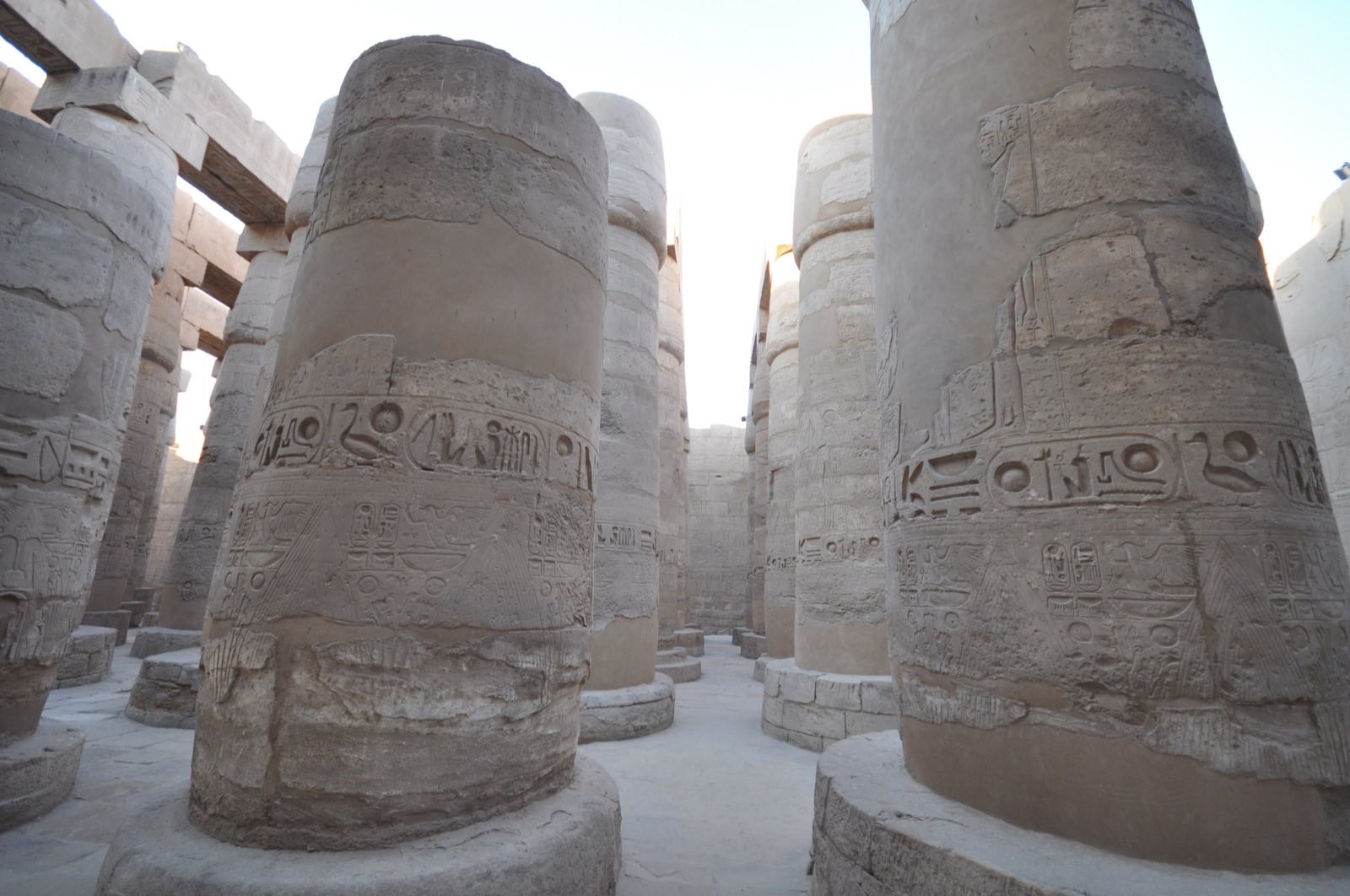
I · USAGEWhich word, when
Short version: say hieroglyphs for the signs and hieroglyphic for anything written in them.
All of these words are English. They differ in grammar, not in meaning, and only one of them is informal.
| Word | What it is | Example |
|---|---|---|
| hieroglyph | Noun: one sign | “The quail chick is the hieroglyph for w.” |
| hieroglyphs | Plural noun: the signs | “The hieroglyphs on this stela run right to left.” |
| hieroglyphic | Adjective | “a hieroglyphic inscription”, “hieroglyphic writing” |
| hieroglyphic | Noun: the script, as Egyptologists use it | “The decree is written in hieroglyphic, Demotic and Greek.” |
| hieroglyphics | Plural noun, everyday English | “Can you read hieroglyphics?” Understood by everyone; specialists say hieroglyphs. |
The specialist habit shows in the titles of the standard textbooks: Gardiner’s Egyptian Grammar: Being an Introduction to the Study of Hieroglyphs, Allen’s Middle Egyptian: An Introduction to the Language and Culture of Hieroglyphs, Collier and Manley’s How to Read Egyptian Hieroglyphs. None of them uses “hieroglyphics”. Used as a noun, “hieroglyphic” names the script, alongside its relatives hieratic and Demotic.
II · ORIGIN“Sacred carving”: a Greek word
The word comes from Greek. The adjective hieroglyphikos joins hieros, “sacred”, and glyphein, “to carve”: sacred carving. Greek writers used it for the picture-signs they saw cut into Egyptian temples, and it reached English through Latin.
The Greeks had a reason to call the script sacred. By their time the old signs were used mostly by priests, on temple walls, while everyday business was written in Demotic. The Rosetta Stone itself sets the three scripts of its decree side by side, and its Greek text calls them the “sacred”, the “native” and the “Greek” letters.
III · IN EGYPTIANWhat the Egyptians called it
The Egyptians themselves called their hieroglyphic script mdw nṯr, “the god’s words”. Both halves are ordinary words you meet early in any course:
The third word is where this app takes its name. sš, conventionally said “sesh”, is written with the scribe’s kit: a palette with two hollows for black and red ink, a water pot and a holder for reed brushes. The same sign writes the verb “to write” and the noun “scribe”.
IV · RELATED SCRIPTSHieratic and Demotic in one minute
Hieroglyphic was one of several ways to write Egyptian. The others grew out of it and lived beside it for centuries.
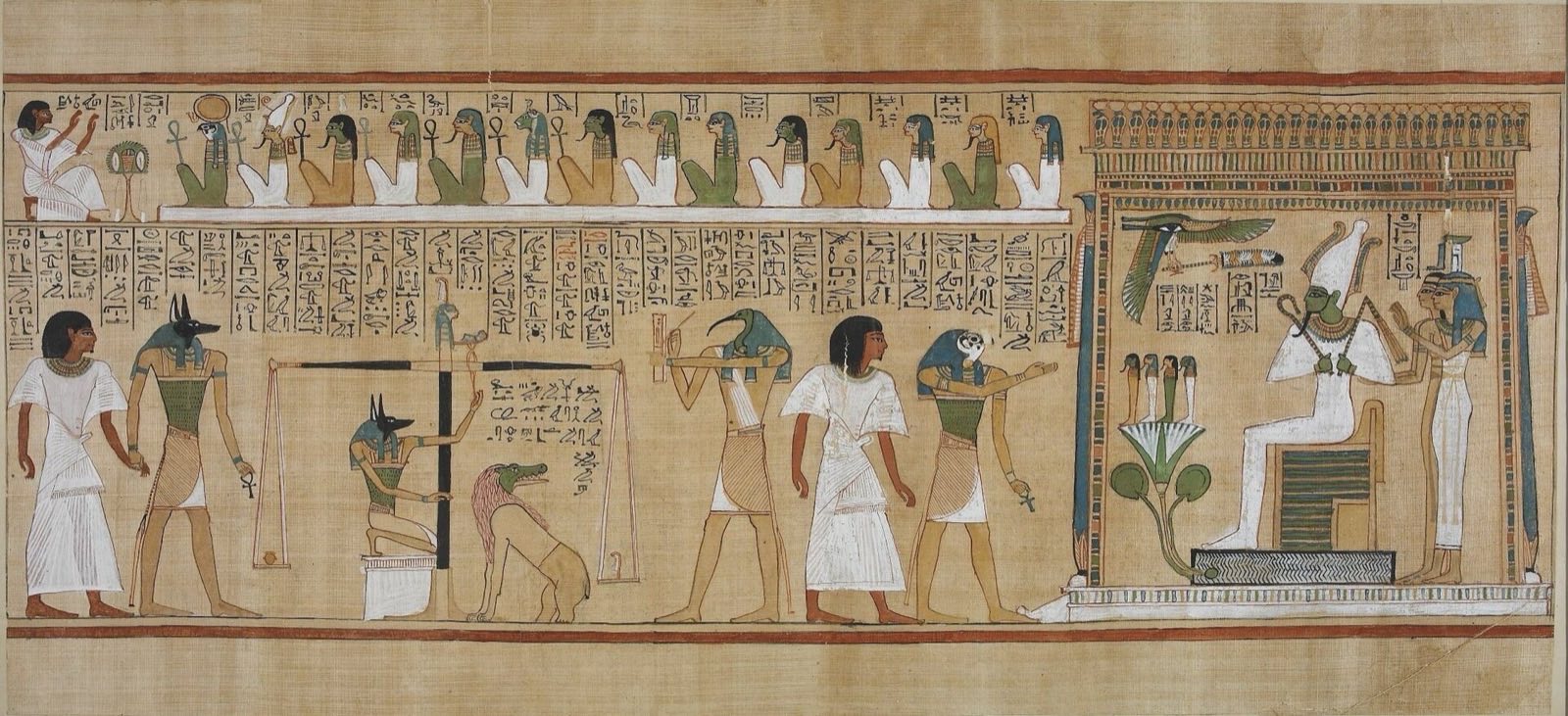
Last came Coptic: Egyptian written in the Greek alphabet plus a few letters taken from Demotic. It is the only stage that writes vowels regularly, which is why it matters for pronunciation. The last dated hieroglyphic inscription was carved at Philae in AD 394; after that, the old signs were no longer understood until their decipherment in 1822.
For how the signs themselves work, read How Egyptian hieroglyphs work. For the stage of the language the hieroglyphs are usually learned in, see What is Middle Egyptian?.
 How Sesh helps
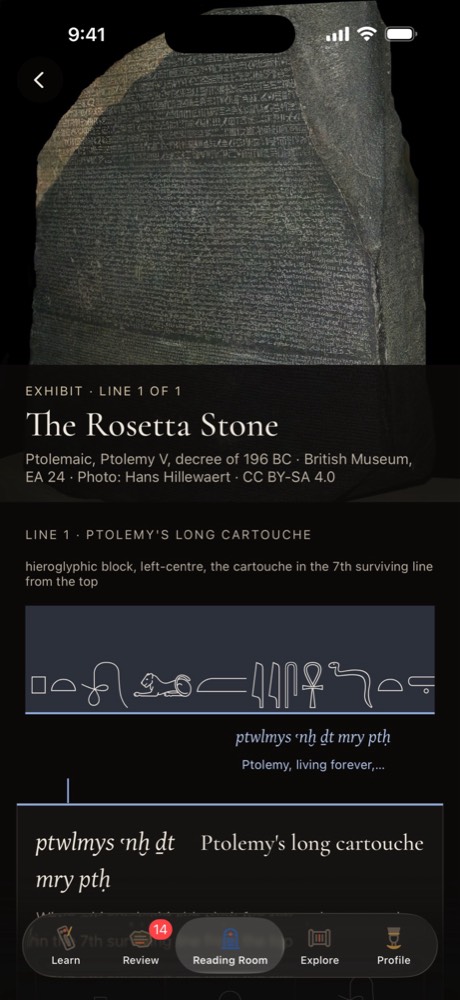
Read hieroglyphic on the Rosetta Stone itself.
In the Sesh Reading Room, the Rosetta Stone is one of 132 museum objects you can read line by line: the signs, their sounds, a word-by-word gloss, then the translation. The course ends in Stage 4 with hieratic, Demotic and Coptic, and the Story of Sinuhe in the original.
- 231 lessons in four stages, from your first sign to literature
- Each reading follows Gardiner, Allen, Faulkner or Collier & Manley
- English, Turkish, German and French; works offline
iPhone and iPad · iOS 17 or later
References
- Gardiner, Alan H. Egyptian Grammar: Being an Introduction to the Study of Hieroglyphs. 3rd edition, revised. Oxford: Griffith Institute, Ashmolean Museum, 1957.
- Allen, James P. Middle Egyptian: An Introduction to the Language and Culture of Hieroglyphs. 3rd edition. Cambridge: Cambridge University Press, 2014.
- Faulkner, Raymond O. A Concise Dictionary of Middle Egyptian. Oxford: Griffith Institute, 1962.
- Collier, Mark, and Bill Manley. How to Read Egyptian Hieroglyphs: A Step-by-Step Guide to Teach Yourself. Revised edition. London: British Museum Press, 1998.
- Liddell, Henry George, Robert Scott and Henry Stuart Jones. A Greek–English Lexicon. 9th edition. Oxford: Clarendon Press, 1940. s.v. ἱερογλυφικός.
- Sesh: Learn Hieroglyphs (iOS app), course, Reading Room and sign library content, version of November 2026. Each lesson card names its source in the works above.
Sesh app content cited as “Sesh, lesson L…” or “Sesh Reading Room” is the app’s own teaching text, itself sourced to the works above. Photos are credited under each image. Not affiliated with the museums shown.